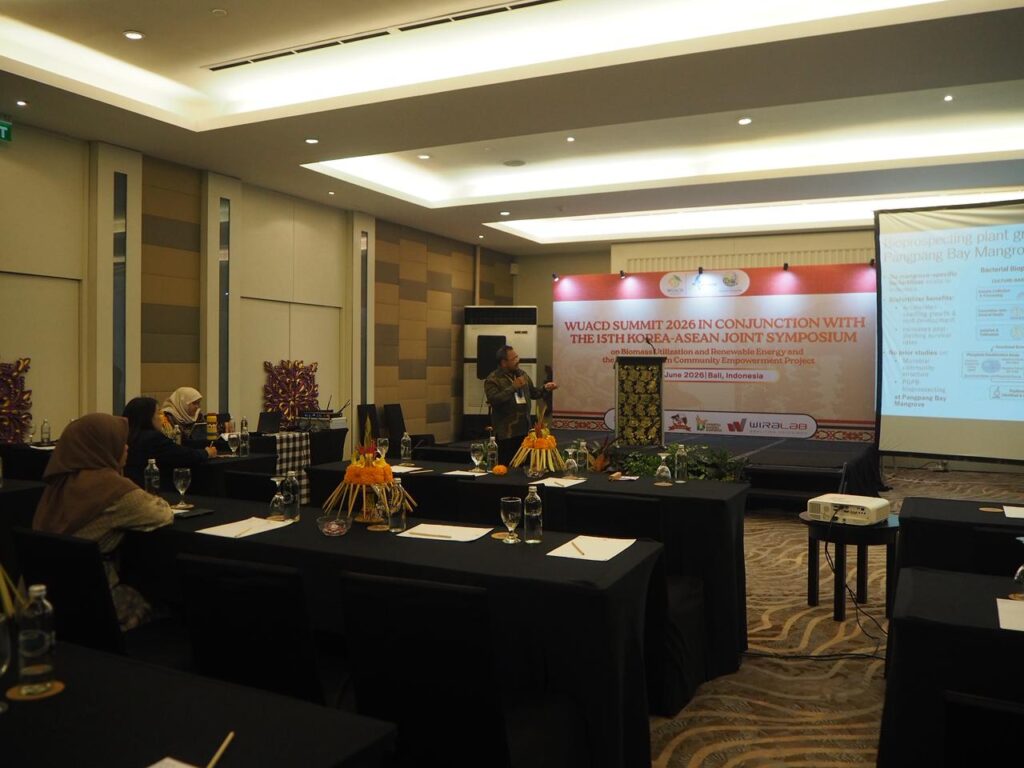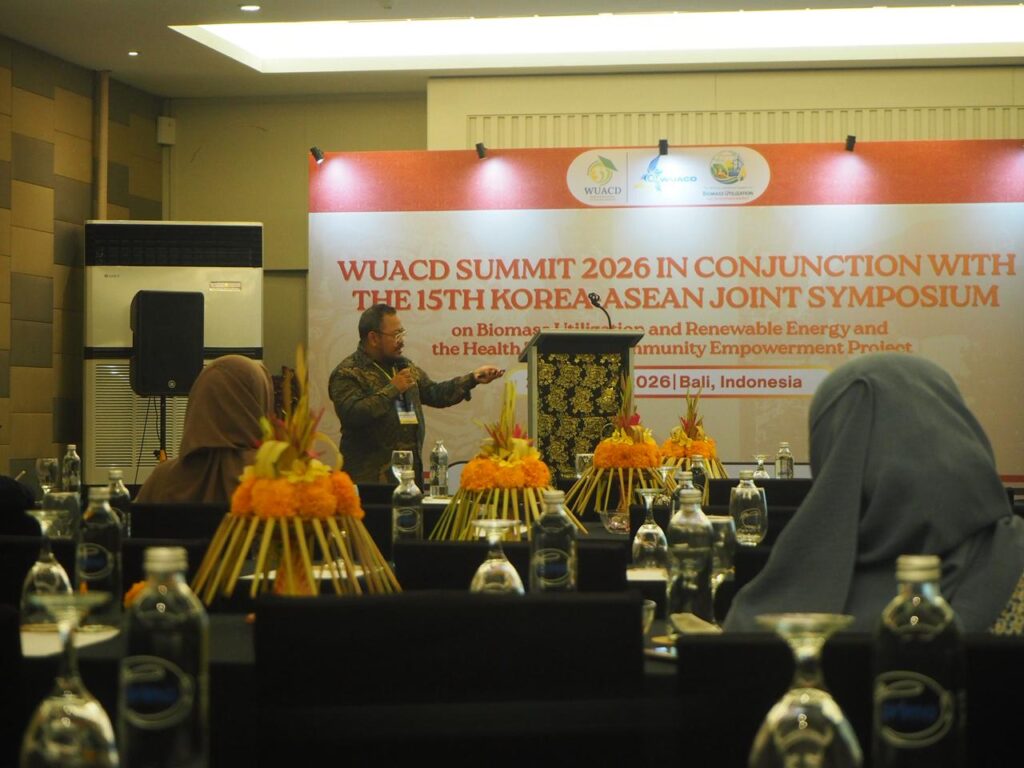
Who would have thought that the mangrove ecosystem in Pangpang Bay, Banyuwangi, harbors microorganisms that could be key to the future development of bioenergy and biotechnology? This potential was the focus of a research presentation by Dr. Almando Geraldi, a lecturer at the Faculty of Science and Technology, Airlangga University, at the international event The 15th Korea–ASEAN Joint Symposium (KAJS) 2026. At this international scientific forum, Dr. Almando presented a study titled “Microbial Community Structure and Bioprospecting of Highly Cellulolytic Bacteria in the Pangpang Bay Mangrove Ecosystem.” This research highlights the potential of the Pangpang Bay mangrove ecosystem in Banyuwangi as a source of microbial diversity with a high capacity to degrade cellulose, one of the main components of lignocellulosic biomass.
Through an analysis of microbial communities and the exploration of cellulolytic bacteria, this study successfully identified potential bacterial groups that play a role in the biomass decomposition process in mangrove ecosystems. Isolates with high cellulolytic activity have the potential to be developed as enzyme sources for various biotechnology applications, such as bioenergy production, lignocellulosic waste processing, and the development of bioprocesses that support the circular economy. Dr. Almando’s participation in KAJS 2026 reflects the commitment of the Faculty of Science and Technology (FST) at Airlangga University to advancing research based on Indonesia’s microbial biodiversity and strengthening international collaboration to drive innovation in biotechnology and the sustainable use of biological resources.